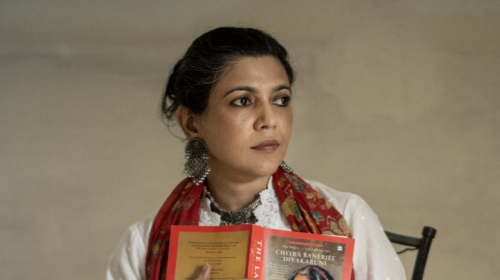
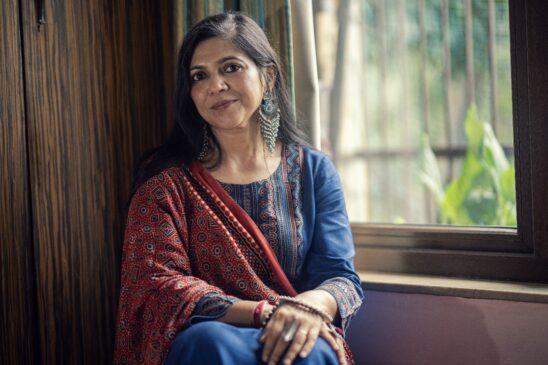
At BrilliantRead Media, we always strive to bring meaningful and inspiring stories from India and around the world to empower and motivate our growing community. As part of this endeavour, we invited Jigyasa Jain for an exclusive interview with us. Jigyasa is a Spiritual Healer, Past Life Regression Therapist, Educator and HealthTech professional working at the intersection of ancient wisdom, consciousness, holistic wellness and modern innovation. With over 14 years of professional experience, her work today is increasingly focused on clinical practice in transpersonal therapy, including Past Life Regression and Life Between Lives therapy. Let’s learn more about her inspiring journey, teaching philosophy, and valuable insights.
Excerpts from our exclusive interview with Jigyasa:
Your work sits at the intersection of ancient spiritual wisdom and modern, analytical thinking. How do you bridge these two seemingly different worlds, without asking people to simply believe in something without questioning it?
I have always believed that spirituality should not demand blind belief. In fact, I am a very logical and analytical person myself. I need to understand the cause before I can accept the effect. That has been my approach throughout my life, and it naturally reflects in the way I work as a therapist and healer.
For me, ancient wisdom and modern thinking don’t necessarily have to be opposites. Ancient traditions have explored consciousness, the mind, human behaviour and the relationship between the individual and something larger than the self for thousands of years. Modern approaches give us different frameworks to examine, question and understand these experiences.
My approach is therefore not about asking someone to believe. It is about creating a space where they can explore their own experiences, ask questions and arrive at their own understanding.
I think healthy scepticism is valuable. If someone has a question or doubt, they should be encouraged to ask it. If an approach can withstand questioning and help a person understand themselves better, then that exploration becomes meaningful.
Ultimately, my work is about creating a bridge between what we have inherited from ancient wisdom and how a modern, questioning mind can engage with it.
How would you explain Past Life Regression Therapy to someone who is completely new to the concept or naturally sceptical about it?
At its core, regression therapy is about accessing deeper layers of the mind and exploring memories, patterns and experiences that may be connected to a person’s present challenges.
We operate largely through our conscious awareness in everyday life, but there are much deeper layers of memory and experience that influence our emotions, reactions, beliefs and behaviour.
Regression therapy uses hypnosis as a process to access these deeper layers. Depending on the therapeutic approach, exploration can involve childhood experiences, early memories, experiences associated with the womb, or what is interpreted within the framework of Past Life Regression as experiences from another lifetime.
The objective is not simply to revisit an experience. The purpose is to understand what may be creating a challenge in the person’s present life and work towards resolving or healing it.
Let me give you a simple example. Suppose someone repeatedly struggles with a particular subject despite putting in effort. We don’t simply say, “You are bad at this subject.” We look deeper. Perhaps the fundamentals aren’t clear, perhaps the teaching method isn’t working for them, or perhaps they have developed a fear around the subject. Once you identify the underlying reason, you can work on it.
Regression therapy works on a similar principle go deeper into the experience, understand what is happening underneath, and then work towards resolution.
For someone who is sceptical, I would say: don’t believe something simply because someone tells you to believe it. Explore, question and understand your own experience.
What are some of the recurring emotional patterns you encounter in people who seek your help, and what usually lies underneath the challenges they experience?
People rarely come to a therapist saying, “I have a psychological pattern.” They come because something in their life isn’t working the way they want it to.
Broadly, I see three major areas that bring people to this kind of work: relationships, health and finances.
Relationships may involve difficulties with a spouse, children, parents, colleagues or even one’s relationship with oneself. Health can become a concern, while financial challenges may appear as repeated patterns of failure, stagnation or difficulty creating abundance.
When we look deeper, we often encounter experiences around self-worth, trust, respect, judgement and unresolved emotional experiences.
For example, someone may constantly feel that they are not valued enough. Another person may struggle to trust their partner because they don’t fundamentally trust themselves. Someone else may feel that they don’t have enough value to contribute to the world.
These patterns can have roots in childhood, present-life experiences or, within the framework of regression therapy, experiences associated with previous lifetimes.
The important thing is not simply to identify the pattern. It is to understand why it exists and what it is trying to tell us.
As someone working between spirituality and a modern, logical mindset, how do you ensure that your healing approach remains grounded and credible?
It can sometimes be challenging to explain spiritual principles through a scientific framework because spirituality often deals with experiences that are subjective and deeply personal.
But my own approach is strongly based on cause and effect.
Whenever I experience an effect, my instinct is to go back and understand the cause. I apply the same principle to my therapeutic work.
For instance, when somebody comes with a physical or emotional challenge, I don’t look at the symptom in isolation. I try to understand the person, their experiences, their beliefs, their emotional patterns and what may be happening underneath.
At the same time, I believe it is extremely important not to confuse complementary approaches with conventional medical treatment. If somebody has cancer or another serious medical condition, appropriate medical care and treatment are essential. Spiritual or therapeutic work should not replace that.
Where holistic approaches can potentially contribute is in helping people work with the emotional and psychological dimensions of their experience, and in supporting their overall wellbeing and recovery journey.
For me, credibility comes from continuing to learn, questioning my own understanding and never presenting spirituality as something that people should accept without thought.
In today’s fast-paced world, what do you believe is the biggest emotional or energetic imbalance people are experiencing?
I believe one of the biggest challenges today is that people have forgotten that they are not alone.
We constantly feel that we have to control everything. We believe that we are responsible for making everything happen exactly the way we want it to. And when something goes wrong, we take complete responsibility for the failure. When something goes right, we also want to take complete credit for it.
That creates an imbalance.
I believe we are part of something much bigger than ourselves. You may call it higher energy, higher consciousness, the universe or something else depending on your belief system.
The important part is the recognition that we are connected to something larger.
When something doesn’t go according to our plan, instead of immediately reacting, we can pause and ask: “What is this situation trying to teach me?”
That small shift from reacting to recognising and responding can change the way we experience life.
We are not here to control the entire matrix. We are here to play our part sincerely and allow the rest to unfold.
If someone feels stuck, anxious or disconnected but isn’t ready to see a therapist or healer, what is the first step you would encourage them to take?
I would give them three words: Awareness. Acceptance. Action.
First, become aware.
Instead of immediately asking, “Whose fault is this?” ask yourself, “What is actually happening within me?”
Second, accept.
Acceptance doesn’t mean announcing your shortcomings to the world. It means being honest with yourself. If you recognise that you made a mistake, accept it. If you recognise that you have contributed to a situation, acknowledge it.
We have a natural tendency to blame somebody else. We can blame our partner, our parents, our colleagues, the government or even God. But blaming doesn’t necessarily create transformation.
When awareness and acceptance happen, action begins to emerge naturally.
I would also encourage people to spend just three to five minutes every day in silence or meditation. It doesn’t have to be complicated. Sit quietly, turn your attention inward and observe yourself.
Over time, that small practice can create greater awareness. The chaos begins to reduce, your sense of balance returns and you become more connected with yourself.
You have spent more than a decade developing your expertise and are now focusing professionally on Past Life Regression and Life Between Lives therapy. What does this next chapter mean to you?
For me, this is not something I have arrived at overnight.
I have been working in this space since 2012, and over the last year and a half especially, I have been consciously studying, refining and polishing my skills so that I can step forward with greater confidence as a professional practitioner of Life Between Lives and Past Life Regression therapy.
What matters to me is being responsible about the work.
I don’t want to simply put a label on myself and start working. I want to continue learning, understanding the modalities deeply and developing the maturity required to work with people and their experiences responsibly.
This next chapter is therefore about commitment. It is about dedicating myself more fully to clinical practice as a professional healer and continuing to explore the relationship between consciousness, healing and human transformation.
Technology has transformed healthcare and wellness. What role do you believe it can play in the future of holistic healing?
Technology has been a tremendous enabler for people working in holistic wellness.
One of the biggest changes came after COVID. We were forced to work online, and suddenly geographical distance stopped being such a significant barrier.
My clients are not all located in the same city. I have worked with people from places such as Nagaland and Ludhiana, people who may not be able to travel for repeated sessions.
Therapeutic work often involves multiple sessions, sometimes a week or two apart. Technology makes that accessibility possible.
It has also helped in another important way: education and access to information.
Today, if I want to explore what a particular scholar or author has written about consciousness, regression or a particular therapeutic modality, information is far more accessible than it was earlier.
That creates an opportunity but also a responsibility. Because information is easily available, practitioners have an even greater responsibility to keep learning, questioning and upgrading their knowledge.
Technology can help holistic wellness become more accessible, but the human element of healing will always remain central.
What does healing truly mean to you and how is it different from simply fixing a problem?
I don’t like using the word “problem” very much. I prefer the word “challenge.”
A challenge is an invitation to understand something.
Healing, for me, is not simply about removing a symptom. It is about understanding what is underneath the experience, becoming aware of ourselves and creating a different relationship with what we are going through.
Sometimes the biggest transformation happens when we stop asking, “Why is this happening to me?” and start asking, “What is this experience showing me?”
Healing is therefore not always about changing the external situation. Sometimes it is about changing our relationship with ourselves and with the situation.
When awareness changes, our choices change. When our choices change, our experiences begin to change.
Finally, what is the one message you would like people to carry with them when they feel lost, disconnected or overwhelmed by life?
Remember that you are not alone.
You don’t have to control everything. You don’t have to have every answer immediately. And you don’t have to understand the entire journey before taking the next step.
Start with awareness. Become honest with yourself. Accept what you discover. Then take the next right action.
And spend a few quiet minutes with yourself every day.
We are constantly looking outside for answers, but sometimes the most important answers begin to emerge when we finally become quiet enough to look within.
You are part of something much bigger than yourself. Your responsibility is to play your part with awareness, acceptance and sincerity and allow the rest to unfold.
At BrilliantRead, we don’t just share startup stories; we bring you journeys that challenge perspectives, spark ideas, and fuel ambition. Every story we feature is carefully chosen to add real value, inspire action, and ignite possibility within our growing community of entrepreneurs and dreamers.
If you have a powerful story, one that can inspire, educate, or create impact, we want to hear from you.